

Jasmine-Scented Oolong Tea Production Process
Step 1: Base Oolong Tea Processing
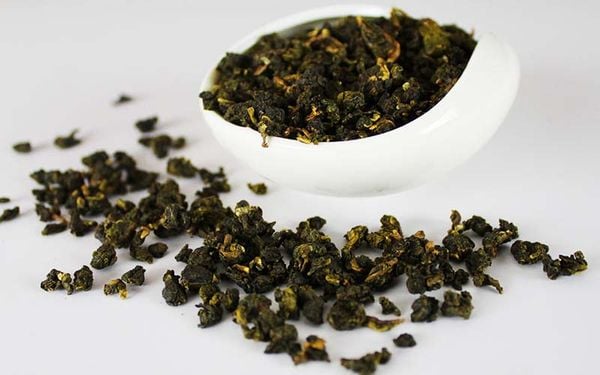
Fresh tea leaves are withered under sunlight and indoors to reduce moisture, gently tossed to initiate partial oxidation, then heated to halt oxidation at 20-60% to preserve the semi-oxidized character of oolong, before being rolled, dried, and rested to stabilize flavor prior to scenting.
Step 2: Harvesting Jasmine Flowers
Jasmine buds are picked in the late afternoon while still closed, then stored in cool, ventilated conditions to naturally bloom at night when their fragrance is at it’s peak.
Step 3: Scenting Process
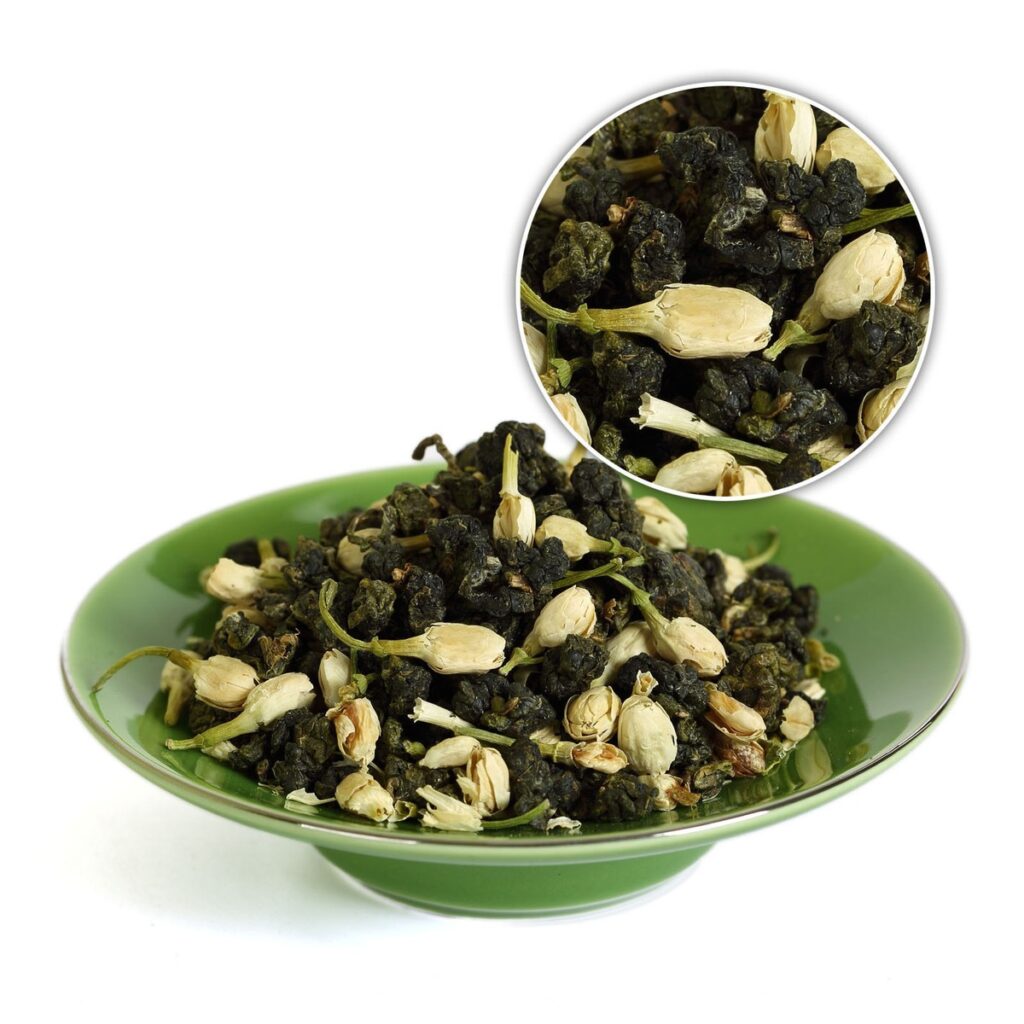
At night, freshly bloomed jasmine flowers are alternately layered with oolong tea leaves, allowing the tea to naturally absorb the jasmine’s aromatic compounds over 8-12 hours in a process sensitive to ambient humidity and temperature.
Step 4: Separation & Drying
After scenting, spent jasmine flowers are carefully removed to prevent off-flavors and moisture buildup, and the tea is gently re-dried at low temperatures (50-60°C) to preserve and stabilize it’s fragrance.
Step 5: Repeated Scenting
For high-quality teas, the scenting process is repeated 3-7 times with fresh jasmine flowers in each round, progressively enhancing the floral aroma, complexity, and persistence.
Step 6: Final Finishing & Packaging
The tea is dried to an ideal moisture level (~3-5%), then sorted and graded for quality consistency, and finally packaged in aroma-sealing, moisture-resistant materials to preserve freshness during storage and transport.
Milk Oolong Tea Production Process
Step 1: Plucking
Tender leaves from the Golden Lily cultivar are carefully hand-picked or machine-harvested, usually one bud with two or three leaves. This cultivar naturally carries a smooth, creamy aroma.
Step 2: Sun Withering
Fresh leaves are spread out under soft sunlight to reduce surface moisture and activate enzymes for aroma development.
Step 3: Cool Withering
The leaves are brought indoors and placed on bamboo trays. They are gently tossed or shaken to lightly bruise the edges, encouraging partial oxidation (about 15–30%). This step develops the characteristic creamy and floral notes of Golden Lily Oolong.
Step 4: Kill-Green
The oxidized leaves are quickly heated in a wok or rotating drum at high temperatures. This halts enzymatic activity and preserves the aroma that has developed.
Step 5: Rolling & Wrapping
The softened leaves are repeatedly rolled and wrapped, traditionally in cloth bags, to form their signature semi-ball shape. This step also breaks down cell walls, releasing flavor compounds.
Step 6: Drying
The rolled leaves are dried in stages with hot air, reducing the moisture content to around 3% – 5%. At this point, the leaves are essentially a finished Golden Lily Oolong.
Step 7: Flavoring
To enhance the creamy and milky notes, the dried Golden Lily Oolong is treated with milk essence. This can be done by lightly spraying or misting the tea leaves with natural or artificial milk flavor, or by blending with milk-flavored extracts or powders during a final drying stage.
Step 8: Final Roasting
A gentle roasting may follow to help the added flavor bind to the leaves and to enhance aroma stability.
Step 9: Sorting & Packaging
The flavored Golden Lily Oolong is then sorted for consistency, graded, and vacuum-sealed to preserve freshness and the enhanced milk aroma.